AI News and Guides

Explore the best AI News and Guides — independent reviews, comparisons, pricing and step-by-step how-to guides, curated by Aizhi.

  • Packed pixel

    Packed pixel

    In packed pixel or chunky framebuffer organization, the bits defining each pixel are clustered and stored consecutively. For example, if there are 16 bits per pixel, each pixel is represented in two consecutive (contiguous) 8-bit bytes in the framebuffer. If there are 4 bits per pixel, each framebuffer byte defines two pixels, one in each nibble. The latter example is as opposed to storing a single 4-bit pixel in a byte, leaving 4 bits of the byte unused. If a pixel has more than one channel, the channels are interleaved when using packed pixel organization. Packed pixel displays were common on early microcomputer system that shared a single main memory for both the central processing unit (CPU) and display driver. In such systems, memory was normally accessed a byte at a time, so by packing the pixels, the display system could read out several pixels worth of data in a single read operation. Packed pixel is one of two major ways to organize graphics data in memory, the other being planar organization, where each pixel is made of individual bits stored in their own plane. For a 4-bit color value, memory would be organized as four screen-sized planes of one bit each and a single pixel's value built up by selecting the appropriate bit from each plane. Planar organization has the advantage that the data can be accessed in parallel, and is used when memory bandwidth is an issue.

    Read more →
  • Automated decision-making

    Automated decision-making

    Automated decision-making (ADM) is the use of data, machines and algorithms to make decisions in a range of contexts, including public administration, business, health, education, law, employment, transport, media and entertainment, with varying degrees of human oversight or intervention. ADM may involve large-scale data from a range of sources, such as databases, text, social media, sensors, images or speech, that is processed using various technologies including computer software, algorithms, machine learning, natural language processing, artificial intelligence, augmented intelligence and robotics. The increasing use of automated decision-making systems (ADMS) across a range of contexts presents many benefits and challenges to human society requiring consideration of the technical, legal, ethical, societal, educational, economic and health consequences. == Overview == There are different definitions of ADM based on the level of automation involved. Some definitions suggests ADM involves decisions made through purely technological means without human input, such as the EU's General Data Protection Regulation (Article 22). However, ADM technologies and applications can take many forms ranging from decision-support systems that make recommendations for human decision-makers to act on, sometimes known as augmented intelligence or 'shared decision-making', to fully automated decision-making processes that make decisions on behalf of individuals or organizations without human involvement. Models used in automated decision-making systems can be as simple as checklists and decision trees through to artificial intelligence and deep neural networks (DNN). Since the 1950s computers have gone from being able to do basic processing to having the capacity to undertake complex, ambiguous and highly skilled tasks such as image and speech recognition, gameplay, scientific and medical analysis and inferencing across multiple data sources. ADM is now being increasingly deployed across all sectors of society and many diverse domains from entertainment to transport. An ADM system (ADMS) may involve multiple decision points, data sets, and technologies (ADMT) and may sit within a larger administrative or technical system such as a criminal justice system or business process. == Data == Automated decision-making involves using data as input to be analyzed within a process, model, or algorithm or for learning and generating new models. ADM systems may use and connect a wide range of data types and sources depending on the goals and contexts of the system, for example, sensor data for self-driving cars and robotics, identity data for security systems, demographic and financial data for public administration, medical records in health, criminal records in law. This can sometimes involve vast amounts of data and computing power. === Data quality === The quality of the available data and its ability to be used in ADM systems is fundamental to the outcomes. It is often highly problematic for many reasons. Datasets are often highly variable; corporations or governments may control large-scale data, restricted for privacy or security reasons, incomplete, biased, limited in terms of time or coverage, measuring and describing terms in different ways, and many other issues. For machines to learn from data, large corpora are often required, which can be challenging to obtain or compute; however, where available, they have provided significant breakthroughs, for example, in diagnosing chest X-rays. == ADM technologies == Automated decision-making technologies (ADMT) are software-coded digital tools that automate the translation of input data to output data, contributing to the function of automated decision-making systems. There are a wide range of technologies in use across ADM applications and systems. ADMTs involving basic computational operations Search (includes 1-2-1, 1-2-many, data matching/merge) Matching (two different things) Mathematical Calculation (formula) ADMTs for assessment and grouping: User profiling Recommender systems Clustering Classification Feature learning Predictive analytics (includes forecasting) ADMTs relating to space and flows: Social network analysis (includes link prediction) Mapping Routing ADMTs for processing of complex data formats Image processing Audio processing Natural Language Processing (NLP) Other ADMT Business rules management systems Time series analysis Anomaly detection Modelling/Simulation === Machine learning === Machine learning (ML) involves training computer programs through exposure to large data sets and examples to learn from experience and solve problems. Machine learning can be used to generate and analyse data as well as make algorithmic calculations and has been applied to image and speech recognition, translations, text, data and simulations. While machine learning has been around for some time, it is becoming increasingly powerful due to recent breakthroughs in training deep neural networks (DNNs), and dramatic increases in data storage capacity and computational power with GPU coprocessors and cloud computing. Machine learning systems based on foundation models run on deep neural networks and use pattern matching to train a single huge system on large amounts of general data such as text and images. Early models tended to start from scratch for each new problem however since the early 2020s many are able to be adapted to new problems. Examples of these technologies include Open AI's DALL-E (an image creation program) and their various GPT language models, and Google's PaLM language model program. == Applications == ADM is being used to replace or augment human decision-making by both public and private-sector organisations for a range of reasons including to help increase consistency, improve efficiency, reduce costs and enable new solutions to complex problems. === Debate === Research and development are underway into uses of technology to assess argument quality, assess argumentative essays and judge debates. Potential applications of these argument technologies span education and society. Scenarios to consider, in these regards, include those involving the assessment and evaluation of conversational, mathematical, scientific, interpretive, legal, and political argumentation and debate. === Law === In legal systems around the world, algorithmic tools such as risk assessment instruments (RAI), are being used to supplement or replace the human judgment of judges, civil servants and police officers in many contexts. In the United States RAI are being used to generate scores to predict the risk of recidivism in pre-trial detention and sentencing decisions, evaluate parole for prisoners and to predict "hot spots" for future crime. These scores may result in automatic effects or may be used to inform decisions made by officials within the justice system. In Canada ADM has been used since 2014 to automate certain activities conducted by immigration officials and to support the evaluation of some immigrant and visitor applications. === Economics === Automated decision-making systems are used in certain computer programs to create buy and sell orders related to specific financial transactions and automatically submit the orders in the international markets. Computer programs can automatically generate orders based on predefined set of rules using trading strategies which are based on technical analyses, advanced statistical and mathematical computations, or inputs from other electronic sources. === Business === ==== Continuous auditing ==== Continuous auditing uses advanced analytical tools to automate auditing processes. It can be utilized in the private sector by business enterprises and in the public sector by governmental organizations and municipalities. As artificial intelligence and machine learning continue to advance, accountants and auditors may make use of increasingly sophisticated algorithms which make decisions such as those involving determining what is anomalous, whether to notify personnel, and how to prioritize those tasks assigned to personnel. === Media and entertainment === Digital media, entertainment platforms, and information services increasingly provide content to audiences via automated recommender systems based on demographic information, previous selections, collaborative filtering or content-based filtering. This includes music and video platforms, publishing, health information, product databases and search engines. Many recommender systems also provide some agency to users in accepting recommendations and incorporate data-driven algorithmic feedback loops based on the actions of the system user. Large-scale machine learning language models and image creation programs being developed by companies such as OpenAI and Google in the 2020s have restricted access however they are likely to have widespread application in fields such as advertising, copywriting, stock imagery and gra

    Read more →
  • Rule induction

    Rule induction

    Rule induction is an area of machine learning in which formal rules are extracted from a set of observations. The rules extracted may represent a full scientific model of the data, or merely represent local patterns in the data. Data mining in general and rule induction in detail are trying to create algorithms without human programming but with analyzing existing data structures. In the easiest case, a rule is expressed with “if-then statements” and was created with the ID3 algorithm for decision tree learning. Rule learning algorithm are taking training data as input and creating rules by partitioning the table with cluster analysis. A possible alternative over the ID3 algorithm is genetic programming which evolves a program until it fits to the data. Creating different algorithm and testing them with input data can be realized in the WEKA software. Additional tools are machine learning libraries for Python, like scikit-learn. == Paradigms == Some major rule induction paradigms are: Association rule learning algorithms (e.g., Agrawal) Decision rule algorithms (e.g., Quinlan 1987) Hypothesis testing algorithms (e.g., RULEX) Horn clause induction Version spaces Rough set rules Inductive Logic Programming Boolean decomposition (Feldman) == Algorithms == Some rule induction algorithms are: Charade Rulex Progol CN2

    Read more →
  • Data preprocessing

    Data preprocessing

    Data preprocessing can refer to manipulation, filtration or augmentation of data before it is analyzed, and is often an important step in the data mining process. Data collection methods are often loosely controlled, resulting in out-of-range values, impossible data combinations, and missing values, amongst other issues. Preprocessing is the process by which unstructured data is transformed into intelligible representations suitable for machine-learning models. This phase of model deals with noise in order to arrive at better and improved results from the original data set which was noisy. This dataset also has some level of missing value present in it. The preprocessing pipeline used can often have large effects on the conclusions drawn from the downstream analysis. Thus, representation and quality of data is necessary before running any analysis. If there is a high proportion of irrelevant and redundant information present or noisy and unreliable data, then knowledge discovery during the training phase may be more difficult. Data preparation and filtering steps can take a considerable amount of processing time. Examples of methods used in data preprocessing include cleaning, instance selection, normalization, one-hot encoding, data transformation, feature extraction and feature selection. == Applications == === Data mining === Data preprocessing allows for the removal of unwanted data with the use of data cleaning, this allows the user to have a dataset to contain more valuable information after the preprocessing stage for data manipulation later in the data mining process. Editing such dataset to either correct data corruption or human error is a crucial step to get accurate quantifiers like true positives, true negatives, false positives and false negatives found in a confusion matrix that are commonly used for a medical diagnosis. Users are able to join data files together and use preprocessing to filter any unnecessary noise from the data which can allow for higher accuracy. Users use Python programming scripts accompanied by the pandas library which gives them the ability to import data from a comma-separated values as a data-frame. The data-frame is then used to manipulate data that can be challenging otherwise to do in Excel. Pandas (software) which is a powerful tool that allows for data analysis and manipulation; which makes data visualizations, statistical operations and much more, a lot easier. Many also use the R programming language to do such tasks as well. The reason why a user transforms existing files into a new one is because of many reasons. Aspects of data preprocessing may include imputing missing values, aggregating numerical quantities and transforming continuous data into categories (data binning). More advanced techniques like principal component analysis and feature selection are working with statistical formulas and are applied to complex datasets which are recorded by GPS trackers and motion capture devices. === Semantic data preprocessing === Semantic data mining is a subset of data mining that specifically seeks to incorporate domain knowledge, such as formal semantics, into the data mining process. Domain knowledge is the knowledge of the environment the data was processed in. Domain knowledge can have a positive influence on many aspects of data mining, such as filtering out redundant or inconsistent data during the preprocessing phase. Domain knowledge also works as constraint. It does this by using working as set of prior knowledge to reduce the space required for searching and acting as a guide to the data. Simply put, semantic preprocessing seeks to filter data using the original environment of said data more correctly and efficiently. There are increasingly complex problems which are asking to be solved by more elaborate techniques to better analyze existing information. Instead of creating a simple script for aggregating different numerical values into a single value, it make sense to focus on semantic based data preprocessing. The idea is to build a dedicated ontology, which explains on a higher level what the problem is about. In regards to semantic data mining and semantic pre-processing, ontologies are a way to conceptualize and formally define semantic knowledge and data. The Protégé (software) is the standard tool for constructing an ontology. In general, the use of ontologies bridges the gaps between data, applications, algorithms, and results that occur from semantic mismatches. As a result, semantic data mining combined with ontology has many applications where semantic ambiguity can impact the usefulness and efficiency of data systems. Applications include the medical field, language processing, banking, and even tutoring, among many more. There are various strengths to using a semantic data mining and ontological based approach. As previously mentioned, these tools can help during the per-processing phase by filtering out non-desirable data from the data set. Additionally, well-structured formal semantics integrated into well designed ontologies can return powerful data that can be easily read and processed by machines. A specifically useful example of this exists in the medical use of semantic data processing. As an example, a patient is having a medical emergency and is being rushed to hospital. The emergency responders are trying to figure out the best medicine to administer to help the patient. Under normal data processing, scouring all the patient’s medical data to ensure they are getting the best treatment could take too long and risk the patients’ health or even life. However, using semantically processed ontologies, the first responders could save the patient’s life. Tools like a semantic reasoner can use ontology to infer the what best medicine to administer to the patient is based on their medical history, such as if they have a certain cancer or other conditions, simply by examining the natural language used in the patient's medical records. This would allow the first responders to quickly and efficiently search for medicine without having worry about the patient’s medical history themselves, as the semantic reasoner would already have analyzed this data and found solutions. In general, this illustrates the incredible strength of using semantic data mining and ontologies. They allow for quicker and more efficient data extraction on the user side, as the user has fewer variables to account for, since the semantically pre-processed data and ontology built for the data have already accounted for many of these variables. However, there are some drawbacks to this approach. Namely, it requires a high amount of computational power and complexity, even with relatively small data sets. This could result in higher costs and increased difficulties in building and maintaining semantic data processing systems. This can be mitigated somewhat if the data set is already well organized and formatted, but even then, the complexity is still higher when compared to standard data processing. Below is a simple a diagram combining some of the processes, in particular semantic data mining and their use in ontology. The diagram depicts a data set being broken up into two parts: the characteristics of its domain, or domain knowledge, and then the actual acquired data. The domain characteristics are then processed to become user understood domain knowledge that can be applied to the data. Meanwhile, the data set is processed and stored so that the domain knowledge can applied to it, so that the process may continue. This application forms the ontology. From there, the ontology can be used to analyze data and process results. Fuzzy preprocessing is another, more advanced technique for solving complex problems. Fuzzy preprocessing and fuzzy data mining make use of fuzzy sets. These data sets are composed of two elements: a set and a membership function for the set which comprises 0 and 1. Fuzzy preprocessing uses this fuzzy data set to ground numerical values with linguistic information. Raw data is then transformed into natural language. Ultimately, fuzzy data mining's goal is to help deal with inexact information, such as an incomplete database. Currently fuzzy preprocessing, as well as other fuzzy based data mining techniques see frequent use with neural networks and artificial intelligence.

    Read more →
  • ArcSoft ShowBiz

    ArcSoft ShowBiz

    ShowBiz is a video editor by ArcSoft for the Windows operating system. It can create VCD and DVDs and can also export to the formats AVI, MPEG, WMV, and MOV. ShowBiz also contains a DVD burning and menu building feature. As of 2003, it was one of the three most dominant bundled titles. == Reception == PC Magazine reviewer Jan Ozer states: "ArcSoft's ShowBiz has evolved into a competent editor that's generally more usable than Dazzle's MovieStar program, providing more configuration controls, better preview features, and a much greater range of fun effects." John Virata, senior editor of Digital Media Online, says in his three page review of ShowBiz DVD 2, "It is an easy editor to work with and has a logically laid out interface that takes you step by step through the video creation and DVD creation process"

    Read more →
  • Artificial intelligence in spirituality

    Artificial intelligence in spirituality

    Some users of artificial intelligence (AI) technologies, especially chatbots, may develop beliefs that AI has or can attain supernatural or spiritual powers. AI models such as ChatGPT are turned to for fortune telling, mysticism and remote viewing. Recent and sudden advances in large language models have led to folk myths about their origin or capabilities, as well as their deification or worship by some users. Tucker Carlson has made similar claims, including directly to Sam Altman. Pope Leo XIV advised priests against using LLM models when it came to the creation of sermons.

    Read more →
  • CrewAI

    CrewAI

    CrewAI is an open-source software framework and platform for building AI agents and multi-agent systems. Written primarily in Python, it is used to define artificial-intelligence agents, assign tasks to them, and coordinate their work through agent teams and workflows. The framework is associated with CrewAI Inc., a startup developing enterprise tools for automating business workflows with large language model-based agents. == History == CrewAI was first released on the Python Package Index in December 2023. The project was created by João Moura and later developed by CrewAI Inc. and open-source contributors. In October 2024, TechCrunch reported that CrewAI had raised $18 million across seed and Series A funding rounds from investors including Boldstart Ventures, Craft Ventures, Earl Grey Capital, and Insight Partners. The report also stated that Andrew Ng and HubSpot co-founder Dharmesh Shah had invested in the company. SiliconANGLE described the company as the developer of an open-source framework for building artificial-intelligence agents and reported that the funding consisted of a seed round led by Boldstart Ventures and a Series A led by Insight Partners. By late 2024, CrewAI had introduced commercial enterprise products built on top of its open-source components. TechCrunch reported that the company's enterprise offering added access controls, analytics, support, and templates for workflow automation. == Features == CrewAI is designed around groups of agents, sometimes called "crews", that can be assigned roles, goals, and tasks. The framework supports agent collaboration, task delegation, tool use, memory, and knowledge sources for retrieval-augmented generation workflows. The project describes two main building blocks: "Crews", which are used for autonomous agent collaboration, and "Flows", which are used for more controlled event-driven workflows. The framework is independent of LangChain and is released under the MIT License. It can be installed as a Python package and is commonly used with external large language model APIs or local models, depending on the developer's configuration. == Business model == CrewAI combines an open-source framework with commercial enterprise products. Its enterprise products are intended for organizations that need to build, monitor, and manage agent-based automations with additional security, observability, and administrative controls.

    Read more →
  • Nouvelle AI

    Nouvelle AI

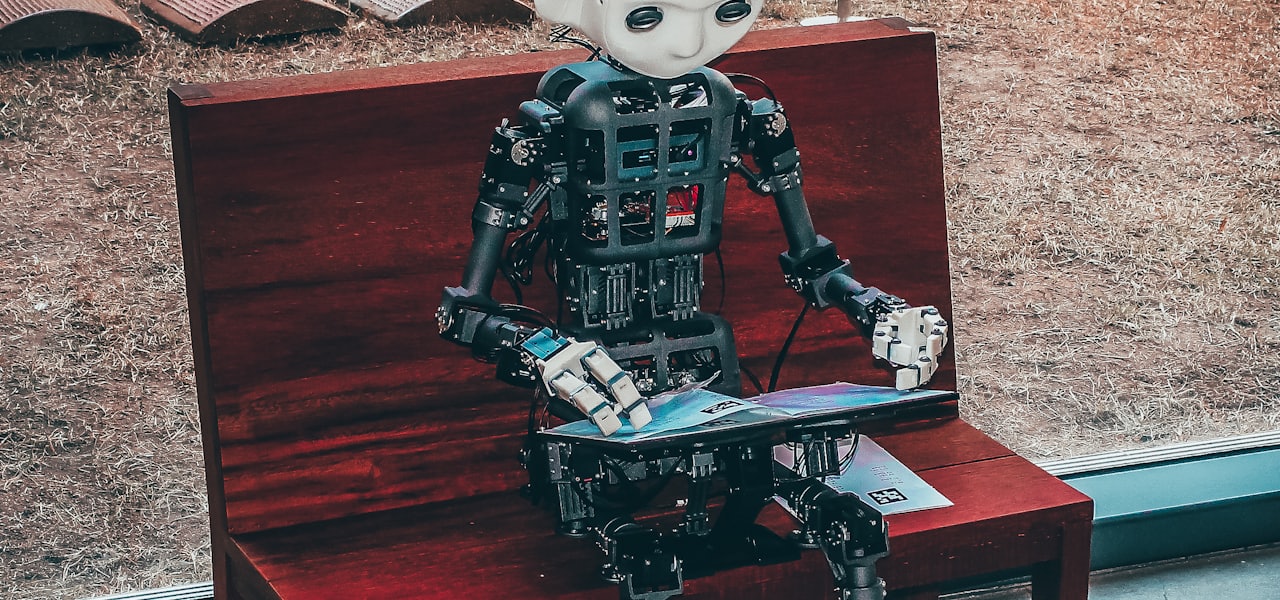
    Nouvelle artificial intelligence (Nouvelle AI) is an approach to artificial intelligence pioneered in the 1980s by Rodney Brooks, who was then part of MIT artificial intelligence laboratory. Nouvelle AI differs from classical AI by aiming to produce robots with intelligence levels similar to insects. Researchers believe that intelligence can emerge organically from simple behaviors as these intelligences interacted with the "real world", instead of using the constructed worlds which symbolic AIs typically needed to have programmed into them. == Motivation == The differences between nouvelle AI and symbolic AI are apparent in early robots Shakey and Freddy. These robots contained an internal model (or "representation") of their micro-worlds consisting of symbolic descriptions. As a result, this structure of symbols had to be renewed as the robot moved or the world changed. Shakey's planning programs assessed the program structure and broke it down into the necessary steps to complete the desired action. This level of computation required a large amount time to process, so Shakey typically performed its tasks very slowly. Symbolic AI researchers had long been plagued by the problem of updating, searching, and otherwise manipulating the symbolic worlds inside their AIs. A nouvelle system refers continuously to its sensors rather than to an internal model of the world. It processes the external world information it needs from the senses when it is required. As Brooks puts it, "the world is its own best model--always exactly up to date and complete in every detail." A central idea of nouvelle AI is that simple behaviors combine to form more complex behaviors over time. For example, simple behaviors can include elements like "move forward" and "avoid obstacles." A robot using nouvelle AI with simple behaviors like collision avoidance and moving toward a moving object could possibly come together to produce a more complex behavior like chasing a moving object. === The frame problem === The frame problem describes an issue with using first-order logic (FOL) to express facts about a robot in the world. Representing the state of a robot with traditional FOL requires the use of many axioms (symbolic language) to imply that things about an environment do not change arbitrarily. Nouvelle AI seeks to sidestep the frame problem by dispensing with filling the AI or robot with volumes of symbolic language and instead letting more complex behaviors emerge by combining simpler behavioral elements. === Embodiment === The goal of traditional AI was to build intelligences without bodies, which would only have been able to interact with the world via keyboard, screen, or printer. However, nouvelle AI attempts to build embodied intelligence situated in the real world. Brooks quotes approvingly from the brief sketches that Turing gave in 1948 and 1950 of the "situated" approach. Turing wrote of equipping a machine "with the best sense organs that money can buy" and teaching it "to understand and speak English" by a process that would "follow the normal teaching of a child." This approach was contrasted to the others where they focused on abstract activities such as playing chess. == Brooks' robots == === Insectoid robots === Brooks focused on building robots that acted like simple insects while simultaneously working to remove some traditional AI characteristics. He created insect-like robots, named Allen and Herbert after cognitive science and AI pioneers Allen Newell and Herbert A. Simon. Brooks's insectoid robots contained no internal models of the world. Herbert, for example, discarded a high volume of the information received from its sensors and never stored information for more than two seconds. ==== Allen ==== Allen had a ring of twelve ultrasonic sonars as its primary sensors and three independent behavior-producing modules. These modules were programmed to avoid both stationary and moving objects. With only this module activated, Allen stayed in the middle of a room until an object approached and then it ran away while avoiding obstacles in its way. ==== Herbert ==== Herbert used infrared sensors to avoid obstacles and a laser system to collect 3D data over a distance of about 12 feet. Herbert also carried a number of simple sensors in its "hand." The robot's testing ground was the real world environment of the busy offices and workspaces of the MIT AI lab where it searched for empty soda cans and carried them away, a seemingly goal-oriented activity that emerged as a result of 15 simple behavior units combining. As a parallel, Simon noted that an ant's complicated path is due to the structure of its environment rather than the depth of its thought processes. ==== Other insectoid robots ==== Other robots by Brooks' team were Genghis and Squirt. Genghis had six legs and was able to walk over rough terrain and follow a human. Squirt's behavior modules had it stay in dark corners until it heard a noise, then it would begin to follow the source of the noise. Brooks agreed that the level of nouvelle AI had come near the complexity of a real insect, which raised a question about whether or not insect level-behavior was and is a reasonable goal for nouvelle AI. === Humanoid robots === Brooks' own recent work has taken the opposite direction to that proposed by Von Neumann in the quotations "theorists who select the human nervous system as their model are unrealistically picking 'the most complicated object under the sun,' and that there is little advantage in selecting instead the ant, since any nervous system at all exhibits exceptional complexity." ==== Cog ==== In the 1990s, Brooks decided to pursue the goal of human-level intelligence and, with Lynn Andrea Stein, built a humanoid robot called Cog. Cog is a robot with an extensive collection of sensors, a face, and arms (among other features) that allow it to interact with the world and gather information and experience so as to assemble intelligence organically in the manner described above by Turing. The team believed that Cog would be able to learn and able to find a correlation between the sensory information it received and its actions, and to learn common sense knowledge on its own. As of 2003, all development of the project had ceased.

    Read more →
  • Language Computer Corporation

    Language Computer Corporation

    Language Computer Corporation (LCC) is a natural language processing research company based in Richardson, Texas. The company develops a variety of natural language processing products, including software for question answering, information extraction, and automatic summarization. Since its founding in 1995, the low-profile company has landed significant United States Government contracts, with $8,353,476 in contracts in 2006-2008. While the company has focused primarily on the government software market, LCC has also used its technology to spin off three start-up companies. The first spin-off, known as Lymba Corporation, markets the PowerAnswer question answering product originally developed at LCC. In 2010, LCC's CEO, Andrew Hickl, co-founded two start-ups which made use of the company's technology. These included Swingly, an automatic question answering start-up, and Extractiv, an information extraction service that was founded in partnership with Houston, Texas-based 80legs.

    Read more →
  • Hallucination (artificial intelligence)

    Hallucination (artificial intelligence)

    In the field of artificial intelligence (AI), a hallucination or artificial hallucination (also called bullshitting, confabulation, or delusion) is a response generated by AI that contains false or misleading information presented as fact. This term draws a loose analogy with human psychology, where a hallucination typically involves false percepts. For example, a chatbot powered by large language models (LLMs), like ChatGPT, may embed plausible-sounding random falsehoods within its generated content. Detecting and mitigating errors and hallucinations pose significant challenges for practical deployment and reliability of LLMs in high-stakes scenarios, such as chip design, supply chain logistics, and medical diagnostics. Some software engineers and statisticians have criticized the specific term "AI hallucination" for unreasonably anthropomorphizing computers. Symbolic artificial intelligence models generally do not produce hallucinations, unlike large language models. == Term == === Origin === Since the 1980s, the term "hallucination" has been used in computer vision with a positive connotation to describe the process of adding detail to an image. For example, the task of generating high-resolution face images from low-resolution inputs is called face hallucination. The first documented use of the term "hallucination" in this sense is in the PhD thesis of Eric Mjolsness in 1986. A notable work is the face hallucination algorithm by Simon Baker and Takeo Kanade published in 1999. In the 2000s, hallucinations were described in statistical machine translation as a failure mode. Since the 2010s, the term has undergone a semantic shift to signify the generation of factually incorrect or misleading outputs by AI systems in tasks like machine translation and object detection. In 2015, hallucinations were identified in visual semantic role labeling tasks by Saurabh Gupta and Jitendra Malik. In 2015, computer scientist Andrej Karpathy used the term "hallucinated" in a blog post to describe his recurrent neural network (RNN) language model generating an incorrect citation link. In 2017, Google researchers used the term to describe the responses generated by neural machine translation (NMT) models when they are not related to the source text, and in 2018, the term was used in computer vision to describe instances where non-existent objects are erroneously detected because of adversarial attacks. In July 2021, Meta warned during its release of BlenderBot 2 that the system is prone to "hallucinations", which Meta defined as "confident statements that are not true". Following OpenAI's ChatGPT release in beta version in November 2022, some users complained that such chatbots often seem to pointlessly embed plausible-sounding random falsehoods within their generated content. Many news outlets, including The New York Times, started to use the term "hallucinations" to describe these models' frequently incorrect or inconsistent responses. In 2023, the Cambridge dictionary updated its definition of hallucination to include this new sense specific to the field of AI. Some researchers have highlighted a lack of consistency in how the term is used, but also identified several alternative terms in the literature, such as confabulations, fabrications, and factual errors. === Definitions and alternatives === Uses, definitions and characterizations of the term "hallucination" in the context of LLMs include: "a tendency to invent facts in moments of uncertainty" (OpenAI, May 2023) "a model's logical mistakes" (OpenAI, May 2023) "fabricating information entirely, but behaving as if spouting facts" (CNBC, May 2023) "making up information" (The Verge, February 2023) "probability distributions" (in scientific contexts) Journalist Benj Edwards, in Ars Technica, writes that the term "hallucination" is controversial, but that some form of metaphor remains necessary; Edwards suggests "confabulation" as an analogy for processes that involve "creative gap-filling". In July 2024, a White House report on fostering public trust in AI research mentioned hallucinations only in the context of reducing them. Notably, when acknowledging David Baker's Nobel Prize-winning work with AI-generated proteins, the Nobel committee avoided the term entirely, instead referring to "imaginative protein creation". Hicks, Humphries, and Slater, in their article in Ethics and Information Technology, argue that the output of LLMs is "bullshit" under Harry Frankfurt's definition of the term, and that the models are "in an important way indifferent to the truth of their outputs", with true statements only accidentally true, and false ones accidentally false. Some researchers also use the derogatory term "botshit", often referring to uncritical use of AI. === Criticism === In the scientific community, some researchers avoid the term "hallucination", seeing it as potentially misleading. It has been criticized by Usama Fayyad, executive director of the Institute for Experimental Artificial Intelligence at Northeastern University, on the grounds that it misleadingly personifies large language models and is vague. Mary Shaw said, "The current fashion for calling generative AI's errors 'hallucinations' is appalling. It anthropomorphizes the software, and it spins actual errors as somehow being idiosyncratic quirks of the system even when they're objectively incorrect." In Salon, statistician Gary Smith argues that LLMs "do not understand what words mean" and consequently that the term "hallucination" unreasonably anthropomorphizes the machine. Murray Shanahan argues that anthropomorphic framing of LLM capabilities, including terms like "hallucination", encourages users and researchers to attribute cognitive processes to systems that operate through statistical pattern completion, and advocates for more careful linguistic practices when discussing LLM behavior. Kristina Šekrst argues that applying psychological vocabulary to LLM outputs obscures the difference between the appearance of mental properties and their genuine presence. Förster & Skop assert that tech companies use the hallucination metaphor to anthropomorphize models and deflect responsibility for non-factual outputs. Some see the AI outputs not as illusory but as prospective—that is, having some chance of being true, similar to early-stage scientific conjectures. The term has also been criticized for its association with psychedelic drug experiences. == In natural language generation == In natural language generation, there are several reasons why natural language models hallucinate: === Hallucination from data === Hallucinations can stem from incomplete, inaccurate or unrepresentative data sets. === Modeling-related causes === The pre-training of generative pretrained transformers (GPT) involves predicting the next word. It incentivizes GPT models to "give a guess" about what the next word is, even when they lack information. Some researchers take an anthropomorphic perspective and posit that hallucinations arise from a tension between novelty and usefulness. For instance, Amabile and Pratt define human creativity as the production of novel and useful ideas. By extension, a focus on novelty in machine creativity can lead to the production of original but inaccurate responses—that is, falsehoods—whereas a focus on usefulness may result in memorized content lacking originality. By 2022, newspapers such as The New York Times expressed concern that, as the adoption of bots based on large language models continued to grow, unwarranted user confidence in bot output could lead to problems. === Interpretability research === In 2025, interpretability research by Anthropic on the LLM Claude identified internal circuits that cause it to decline to answer questions unless it knows the answer. By default, the circuit is active and the LLM doesn't answer. When the LLM has sufficient information, these circuits are inhibited and the LLM answers the question. Hallucinations were found to occur when this inhibition happens incorrectly, such as when Claude recognizes a name but lacks sufficient information about that person, causing it to generate plausible but untrue responses. === Examples === On 15 November 2022, researchers from Meta AI published Galactica, designed to "store, combine and reason about scientific knowledge". Content generated by Galactica came with the warning: "Outputs may be unreliable! Language Models are prone to hallucinate text." In one case, when asked to draft a paper on creating avatars, Galactica cited a fictitious paper from a real author who works in the relevant area. Meta withdrew Galactica on 17 November due to offensiveness and inaccuracy. OpenAI's ChatGPT, released in beta version to the public on November 30, 2022, was based on the foundation model GPT-3.5 (a revision of GPT-3). Professor Ethan Mollick of Wharton called it an "omniscient, eager-to-please intern who sometimes lies to you". Data scientist Teresa Kuba

    Read more →
  • Sparkles emoji

    Sparkles emoji

    The Sparkles emoji (U+2728 ✨ SPARKLES) is an emoji that has one large star surrounded by smaller stars. Originating from Japan to represent sparkles used in anime and manga, the sparkles are often used as emphasis in text by surrounding words or phrases with it. It is the third most-used emoji in the world on Twitter as of 2021. Since the early 2020s it has been used by major software companies to represent artificial intelligence, marketing the technology as "like magic". == Development == According to Emojipedia, the Sparkles emoji was first used by Japanese mobile operators SoftBank, Docomo and au in the late 1990s. The emoji was added to Unicode 6.0 in 2010 and Emoji 1.0 in 2015. On some platforms the Sparkles emoji has been multicoloured whilst on other platforms it has been one colour. Twitter and Microsoft's Sparkles have changed from being multicoloured to being a single colour. Samsung's version of the emoji previously had a night sky in the background. == Usage == === Interpersonal communication === The Sparkles emoji was originally meant to represent the usage of sparkles in Japanese anime and manga, where the sparkles are used to represent beauty, happiness or awe. The emoji has several meanings and depends upon context. Starting in the late 2010s, the emoji started being used to surround words or phrases to be used as emphasis, an example from the book Because Internet being "I would simply ✨pass away✨". It can also be used as sarcasm, irony or as a way to mock people. Without emoji this could be represented with tildes or asterisks, for example, "~tildes~" or "~asterisk plus tilde~" or "~~true sparkle exuberance~~". The sparkles emoji can be used to represent stars in text, be used to represent cleanliness or can be used to mean "orgasm" whilst sexting. In September 2021 the Sparkles emoji overtook the Pleading Face (🥺) emoji to become the third most-used emoji in the world according to Emojipedia, with approximately 1 per cent of all tweets containing the Sparkles emoji. === Artificial intelligence === In the early 2020s, the Sparkles emoji started being used as an icon to represent artificial intelligence (AI). Companies who use the emoji this way include Google, OpenAI, Samsung, Microsoft, Adobe, Spotify and Zoom. As of August 2024, seven of the top 10 software companies by market capitalisation use the Sparkles emojis with AI. OpenAI has different versions of the Sparkles for different versions of the models that ChatGPT uses. One explanation is that Sparkles is being used by these companies as a way to market AI as "magic". Marketing technology as "magic" has been used before AI, particularly by Apple. Another explanation given by designers and marketers choosing to use Sparkles to signify AI is simply that other platforms are doing it, making it familiar to users. Around 2024, some of these companies started removing two of the smaller stars from the emoji in their AI services and have kept the one large star, an example being Google's Gemini chatbot. In early 2024, the Nielsen Norman Group provided test subjects with the star in isolation and found that people did not associate the symbol with AI, but instead mostly with "optimisation" or "favourite or save an item".

    Read more →
  • JAX (software)

    JAX (software)

    JAX is a Python library for accelerator-oriented array computation and program transformation, designed for high-performance numerical computing and large-scale machine learning. It is developed by Google with contributions from Nvidia and other community contributors. It is described as bringing together a modified version of the automatic differentiation system autograd and OpenXLA's XLA (Accelerated Linear Algebra). It is designed to follow the structure and workflow of NumPy as closely as possible and works with various existing frameworks such as TensorFlow and PyTorch. The primary features of JAX are: Providing a unified NumPy-like interface to computations that run on CPU, GPU, or TPU, in local or distributed settings. Built-in Just-In-Time (JIT) compilation via OpenXLA, an open-source machine learning compiler ecosystem. Efficient evaluation of gradients via its automatic differentiation transformations. Automatic vectorization to efficiently map functions over arrays representing batches of inputs. == Libraries using Jax == Flax Equinox Optax

    Read more →
  • Caspio

    Caspio

    Caspio, Inc. is an American software company providing a low-code platform for building cloud-based business applications. Founded in 2000 by Frank Zamani, the company is headquartered in Sunnyvale, California, with operations in Poland, the Philippines, and Spain. Caspio’s platform allows organizations to create online database applications and workflow tools without extensive coding. == History == Caspio was founded by Frank Zamani in 2000. The company initially focused on simplifying custom cloud applications and reducing development time and cost as compared to traditional software development. Caspio released the first version of its platform, Caspio Bridge, in 2001. In 2014, Caspio released a HIPAA-Compliant Edition of its low-code application development platform. Caspio also released an EU General Data Protection Regulation (GDPR) Compliance Edition of its low-code application development platform in 2016. Caspio's second European Software Development Center opened in Kraków, Poland in 2017. In 2019, Forrester Research listed Caspio and three other platforms in its highest of four ranked tiers of twelve low-code platforms for business developers based on rankings of offerings and strategy at that time. Caspio also opened data centers in Montreal, Canada and India in 2020.

    Read more →
  • AI safety

    AI safety

    AI safety is an interdisciplinary field focused on preventing accidents, misuse, or other harmful consequences arising from artificial intelligence systems. It encompasses AI alignment (which aims to ensure AI systems behave as intended), monitoring AI systems for risks, and enhancing their robustness. The field is particularly concerned with existential risks posed by advanced AI models. Beyond technical research, AI safety involves developing norms and policies that promote safety, including advocacy for regulations at different levels of government. The field gained significant popularity in 2023, with rapid progress in generative AI and public concerns voiced by researchers and CEOs about potential dangers. During the 2023 AI Safety Summit, the United States and the United Kingdom both established their own AI Safety Institute. However, researchers have expressed concern that AI safety measures are not keeping pace with the rapid development of AI capabilities. == Motivations == Scholars discuss current risks from critical systems failures, bias, and AI-enabled surveillance, as well as emerging risks like technological unemployment, digital manipulation, weaponization, AI-enabled cyberattacks and bioterrorism. They also discuss speculative risks from losing control of future artificial general intelligence (AGI) agents, or from AI enabling perpetually stable dictatorships. === Existential safety === Some have criticized concerns about AGI, such as Andrew Ng who compared them in 2015 to "worrying about overpopulation on Mars when we have not even set foot on the planet yet". Stuart J. Russell on the other side urges caution, arguing that "it is better to anticipate human ingenuity than to underestimate it". AI researchers have widely differing opinions about the severity and primary sources of risk posed by AI technology – though surveys suggest that experts take high consequence risks seriously. In two surveys of AI researchers, the median respondent was optimistic about AI overall, but placed a 5% probability on an "extremely bad (e.g. human extinction)" outcome of advanced AI. In a 2022 survey of the natural language processing community, 37% agreed or weakly agreed that it is plausible that AI decisions could lead to a catastrophe that is "at least as bad as an all-out nuclear war". == History == Risks from AI began to be seriously discussed at the start of the computer age: Moreover, if we move in the direction of making machines which learn and whose behavior is modified by experience, we must face the fact that every degree of independence we give the machine is a degree of possible defiance of our wishes. In 1988 Blay Whitby published a book outlining the need for AI to be developed along ethical and socially responsible lines. From 2008 to 2009, the Association for the Advancement of Artificial Intelligence (AAAI) commissioned a study to explore and address potential long-term societal influences of AI research and development. The panel was generally skeptical of the radical views expressed by science-fiction authors but agreed that "additional research would be valuable on methods for understanding and verifying the range of behaviors of complex computational systems to minimize unexpected outcomes". In 2011, Roman Yampolskiy introduced the term "AI safety engineering" at the Philosophy and Theory of Artificial Intelligence conference, listing prior failures of AI systems and arguing that "the frequency and seriousness of such events will steadily increase as AIs become more capable". In 2014, philosopher Nick Bostrom published the book Superintelligence: Paths, Dangers, Strategies. He has the opinion that the rise of AGI has the potential to create various societal issues, ranging from the displacement of the workforce by AI, manipulation of political and military structures, to even the possibility of human extinction. His argument that future advanced systems may pose a threat to human existence prompted Elon Musk, Bill Gates, and Stephen Hawking to voice similar concerns. In 2015, dozens of artificial intelligence experts signed an open letter on artificial intelligence calling for research on the societal impacts of AI and outlining concrete directions. To date, the letter has been signed by over 8000 people including Yann LeCun, Shane Legg, Yoshua Bengio, and Stuart Russell. In the same year, a group of academics led by professor Stuart J. Russell founded the Center for Human-Compatible AI at the University of California Berkeley and the Future of Life Institute awarded $6.5 million in grants for research aimed at "ensuring artificial intelligence (AI) remains safe, ethical and beneficial". In 2016, the White House Office of Science and Technology Policy and Carnegie Mellon University announced The Public Workshop on Safety and Control for Artificial Intelligence, which was one of a sequence of four White House workshops aimed at investigating "the advantages and drawbacks" of AI. In the same year, Concrete Problems in AI Safety – one of the first and most influential technical AI Safety agendas – was published. In 2017, the Future of Life Institute sponsored the Asilomar Conference on Beneficial AI, where more than 100 thought leaders formulated principles for beneficial AI including "Race Avoidance: Teams developing AI systems should actively cooperate to avoid corner-cutting on safety standards". In 2018, the DeepMind Safety team outlined AI safety problems in specification, robustness, and assurance. The following year, researchers organized a workshop at ICLR that focused on these problem areas. In 2021, Unsolved Problems in ML Safety was published, outlining research directions in robustness, monitoring, alignment, and systemic safety. In 2023, Rishi Sunak said he wants the United Kingdom to be the "geographical home of global AI safety regulation" and to host the first global summit on AI safety. The AI safety summit took place in November 2023, and focused on the risks of misuse and loss of control associated with frontier AI models. During the summit the intention to create the International Scientific Report on the Safety of Advanced AI was announced. In 2024, The US and UK forged a new partnership on the science of AI safety. The MoU was signed on 1 April 2024 by US commerce secretary Gina Raimondo and UK technology secretary Michelle Donelan to jointly develop advanced AI model testing, following commitments announced at an AI Safety Summit in Bletchley Park in November. In 2025, an international team of 96 experts chaired by Yoshua Bengio published the first International AI Safety Report. The report, commissioned by 30 nations and the United Nations, represents the first global scientific review of potential risks associated with advanced artificial intelligence. It details potential threats stemming from misuse, malfunction, and societal disruption, with the objective of informing policy through evidence-based findings, without providing specific recommendations. == Research focus == AI safety research areas include robustness, monitoring, and alignment. === Robustness === ==== Adversarial robustness ==== AI systems are often vulnerable to adversarial examples or "inputs to machine learning (ML) models that an attacker has intentionally designed to cause the model to make a mistake". For example, in 2013, Szegedy et al. discovered that adding specific imperceptible perturbations to an image could cause it to be misclassified with high confidence. This continues to be an issue with neural networks, though in recent work the perturbations are generally large enough to be perceptible. The image on the right is predicted to be an ostrich after the perturbation is applied. (Left) is a correctly predicted sample, (center) perturbation applied magnified by 10x, (right) adversarial example. Adversarial robustness is often associated with security. Researchers demonstrated that an audio signal could be imperceptibly modified so that speech-to-text systems transcribe it to any message the attacker chooses. Network intrusion and malware detection systems also must be adversarially robust since attackers may design their attacks to fool detectors. Models that represent objectives (reward models) must also be adversarially robust. For example, a reward model might estimate how helpful a text response is and a language model might be trained to maximize this score. Researchers have shown that if a language model is trained for long enough, it will leverage the vulnerabilities of the reward model to achieve a better score and perform worse on the intended task. This issue can be addressed by improving the adversarial robustness of the reward model. More generally, any AI system used to evaluate another AI system must be adversarially robust. This could include monitoring tools, since they could also potentially be tampered with to produce a higher reward. Large language models (LLMs) can be vulnerable to prom

    Read more →
  • Smart speaker industry in South Korea

    Smart speaker industry in South Korea

    Smart speakers, or AI speakers, have been developed by multiple domestic electronics and telecommunications firms in South Korea. Since their introduction to the local market in 2016, they have been used by millions of people in the country. == Brands == === Google === In September 2018, Google Home (including the Google Home Mini) launched in South Korea. Running Google Assistant, it featured simultaneous recognition of two languages among a total of seven, including Korean. At launch, it could play music from Bugs!, in addition to YouTube. === Kakao === In November 2017, Kakao launched the Kakao Mini, featuring integrated KakaoTalk functionality. === KT === KT launched the GiGA Genie smart speaker in January 2017, using a Harman Kardon speaker. In November 2017, KT announced GiGA Genie LTE, a portable AI speaker with LTE support. They also released a mini speaker called GiGA Genie Buddy. In 2018, KT created a special version of GiGa Genie with a screen for use in hotels. On 29 April 2019, KT announced the GiGA Genie Table TV, a consumer-oriented smart speaker with a display. It featured paid TV access through Wi-Fi. Based on usage data from the hotel model, KT decided not to add a touchscreen. The Table TV also featured a limited-access "personalized-text-to-speech technology" which could use parents' voice recording inputs to read children books. In February 2022, KT began rolling out Amazon Alexa integration into its speakers for English support. === Naver === In August 2017, Naver announced the Wave smart speaker, operating on Clova. In October 2017, Naver launched the Friends smart speaker, which were designed based on Line characters. ==== LG Uplus ==== In December 2017, LG Uplus launched the Friends+ speaker with Naver, operating on U+ Home AI. === Samsung === In August 2018, Samsung announced the Samsung Galaxy Home in partnership with Spotify. The original size was delayed, while the Galaxy Home Mini appeared briefly as a bonus for Samsung Galaxy S20 preorders in South Korea in February 2020. === SK Telecom === SK Telecom launched the Nugu smart speaker in September 2016, using an Astell & Kern audio system. In August 2017, SKT released a portable speaker named Nugu mini. In July 2018, SKT launched the Nugu Candle, featuring expanded mood lighting. The first-generation Nugu was subsequently discontinued. On 18 April 2019, SKT released the NUGU Nemo AI, which featured a display and JBL stereo speaker. In August 2019, SKT collaborated with SM Entertainment, incorporating functions related to the agency's artists into Nugu. In January 2022, SKT showcased the NUGU Candle SE, introducing Alexa support. == Usage == In 2018, approximately 3 million people in South Korea used smart speakers. According to data from KT in 2018, the most common commands to its speakers were for controlling televisions. Based on a broader survey in 2017, music was selected as the most frequent use case. By 2018, smart speaker companies were partnering with reading and other education services, adding potential use-cases for children. By 2022, smart speakers were being utilized by the South Korean government. SKT, in partnership with 70 regional governments, distributed smart speakers to 12,000 senior citizens living alone. The government paid for monthly subscriptions to help seniors stay mentally engaged. Naver made an agreement with the Seoul Metropolitan Government to provide Clova CareCall, an automated health checkup program to hundreds of senior citizens living alone. KT's AI care service included an emergency dispatch call function and medication notifications. == Criticism == === Communication === In a survey of 300 users in 2017, approximately half reported having some type of communication issue with their smart speakers. === Privacy === South Korean smart speakers sparked privacy concerns when they were found to be collecting and documenting user audio data in 2019. The speaker companies responded that only a minority of data was collected and that it was anonymized. They stated that such recordings were collected for performance improvements.

    Read more →